
Most product recommendation emails show customers a collection of products under a headline like “You might also like.” But the products being recommended matter much more than the headline.
A customer who recently purchased something may be interested in compatible accessories. Someone browsing a particular category might want to see similar options. Another customer might need help choosing between products before they’re ready to buy.
The best recommendation emails make those suggestions relevant to the customer’s interests or needs.
Here are eight ecommerce product recommendation email examples showing different ways brands approach cross-selling, upselling and product discovery.
They fall into four approaches. Some use the signals customers leave when they browse and purchase. Some build on products that naturally work together. Some help a customer who knows the category but not which option suits them. Others rely on context the brand supplies itself, through practical content, expert selection or current trends.
Shopping activity
Forever 21
recommend products customers viewed but didn’t purchase
Marketing angle: Use previous browsing interest to encourage another purchase.
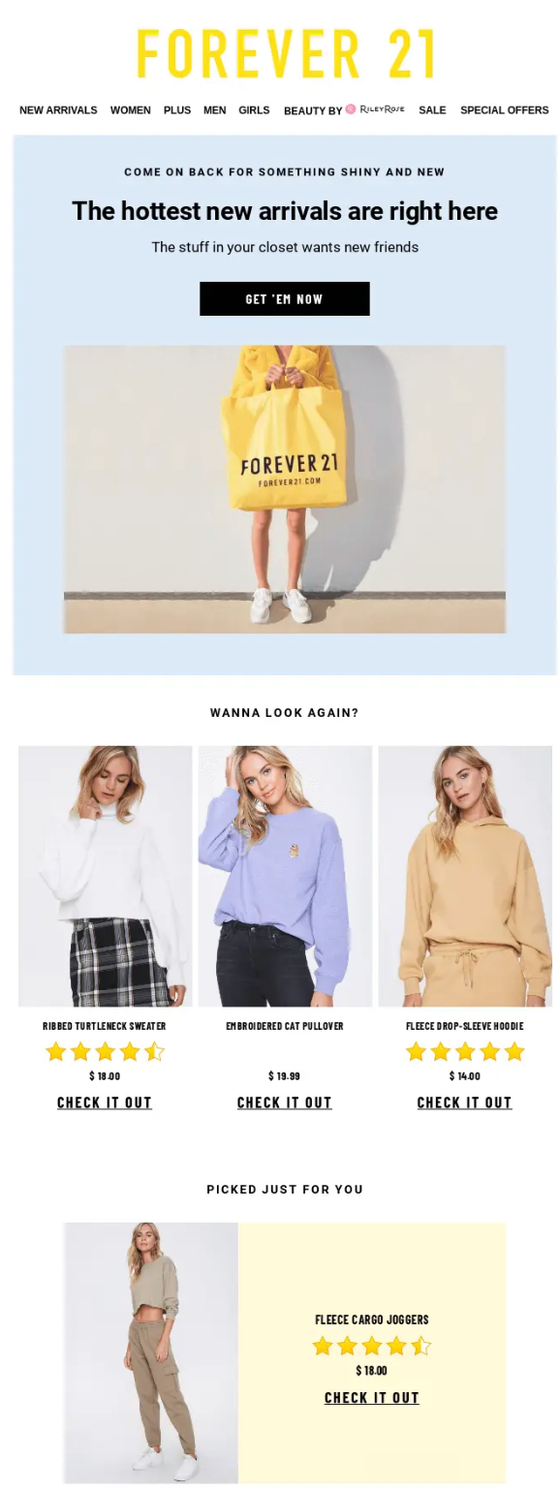
Forever 21 sends a follow-up email after a purchase, showing products the customer had previously viewed but didn’t include in their order. The email includes a “Wanna look again?” section followed by additional recommendations under “Picked just for you.”
Why it works: The recommendations build on products the customer has already expressed interest in. Instead of introducing an unrelated collection, Forever 21 brings back items the customer considered and offers similar options that might be a better match.
Product recommendation email tip: Compare browsing history with completed orders to identify products customers considered but didn’t purchase. You can then recommend those items or similar products, while excluding anything they’ve already bought.
Looks and routines
Danessa Myricks Beauty
recommend products that complete a makeup look
Marketing angle: Cross-sell products that complement one another.
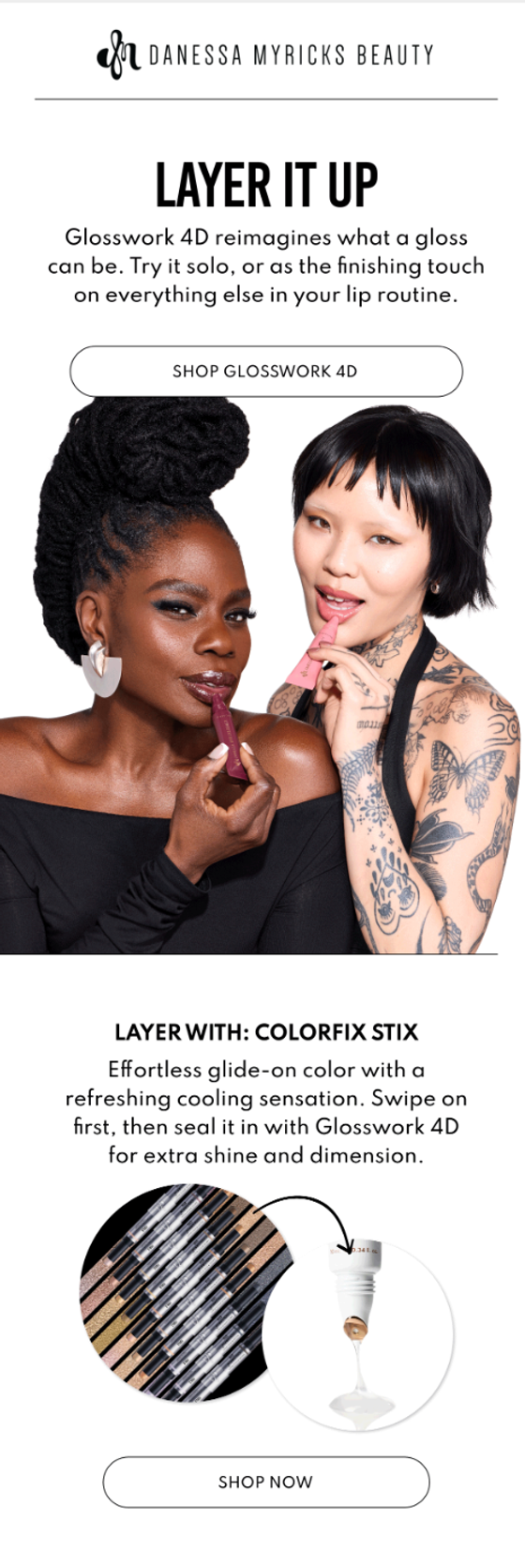
Danessa Myricks Beauty sends an email titled Complete Your Lip Look, pairing its Glosswork 4D product with lip color.
Why it works: The recommendation is built around the finished result rather than the individual products. Instead of asking customers to buy another beauty product, the email shows how the recommended products can be used together to complete a lip look.
Product recommendation email tip: Identify products that naturally complement one another and explain the benefit of using them together. For beauty brands, that might be a lipstick and gloss; for apparel brands, it could be clothing and matching accessories.
Looks and routines
Every Man Jack
build product recommendations around a complete routine
Marketing angle: Introduce multiple products through a step-by-step routine.
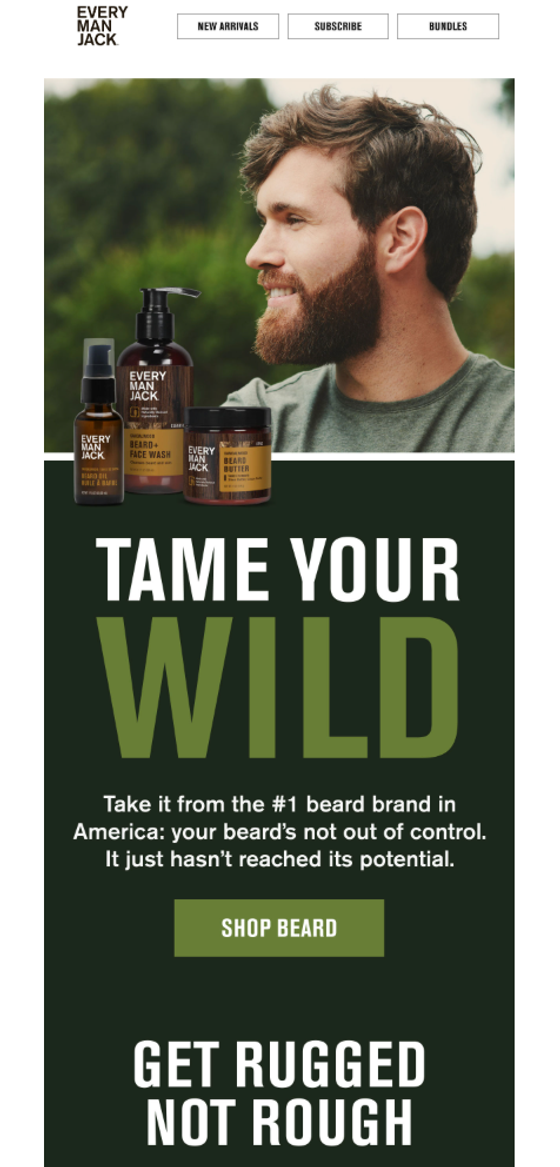
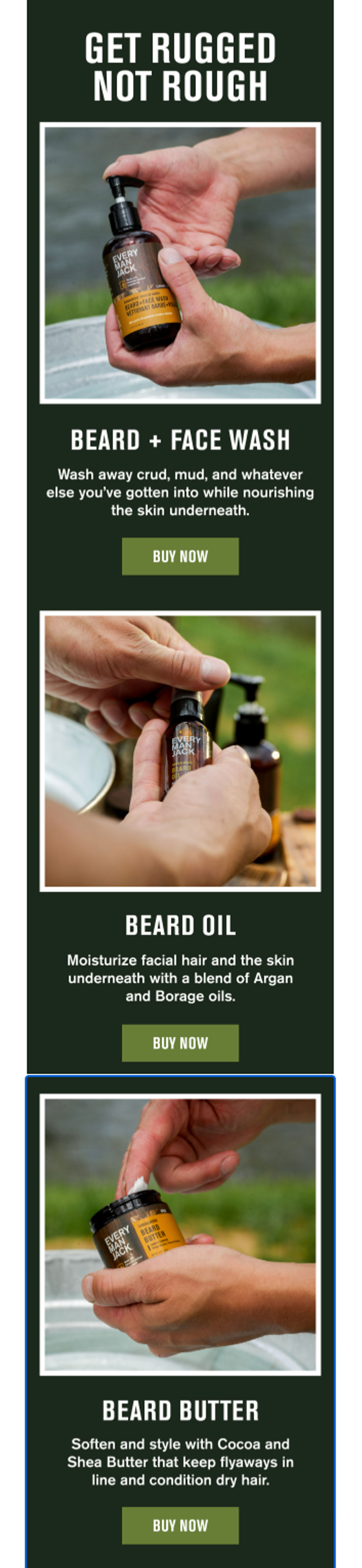
Every Man Jack uses a three-step beard care routine to introduce its grooming products. Instead of presenting a collection of products without context, the email explains where different products fit into the customer’s grooming process.
Why it works: The recommendations become easier to understand because each product has a specific role. A customer interested in improving their beard care routine can see what products are needed and how they work together.
Product recommendation email tip: If your products form part of a routine, organize recommendations around the steps customers follow. A skincare brand could recommend products for cleansing, treatment and moisturizing, while a haircare brand could build a routine around washing, conditioning and styling.
Choosing a product
Magic Spoon
help customers discover the right product through a quiz
Marketing angle: Turn product selection into an interactive discovery experience.
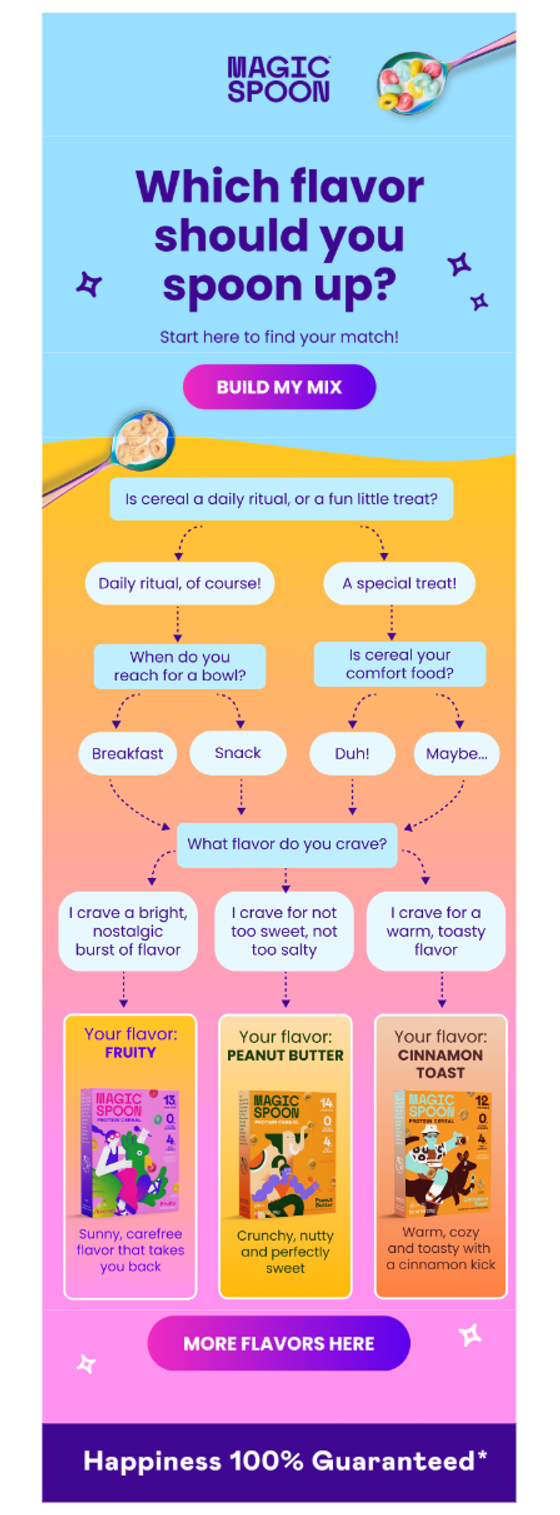
Magic Spoon’s Which Magic Spoon flavor are you? email uses a playful decision tree to help readers discover a cereal flavor that matches their preferences.
Why it works: Rather than presenting every flavor and expecting customers to choose, Magic Spoon makes the decision part of the experience. The questions guide customers toward a recommendation while making product discovery more engaging.
Product recommendation email tip: When customers have several similar products to choose from, a short product-selection quiz can help them find a suitable option. Questions about flavor preferences, intended use or product characteristics can be used to recommend a smaller, more relevant selection.
Choosing a product
Onsen
help customers choose between different product bundles
Marketing angle: Make product and bundle comparisons easier to understand.
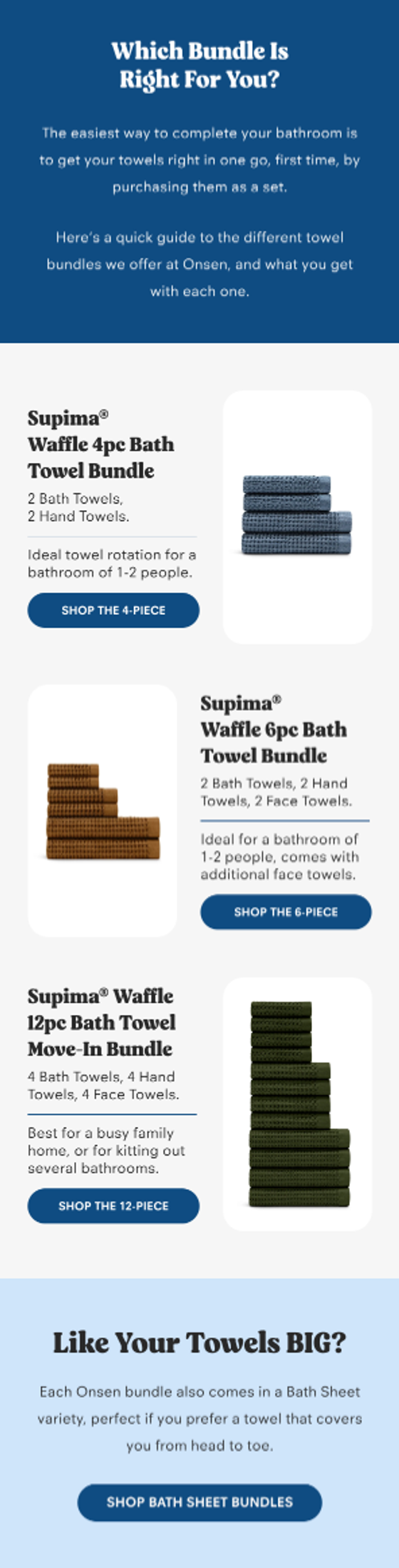
Onsen sends an email titled A simple guide to every Onsen bundle, helping customers explore the available bundle options and determine which one suits their needs.
Why it works: A customer considering a bundle may struggle to understand which products are included and whether buying a larger set makes sense. By organizing the options around the customer’s decision, Onsen makes the product range easier to evaluate.
Product recommendation email tip: When selling different product bundles or tiers, help customers compare what’s included and who each option is suitable for. This can also create opportunities to recommend a more complete bundle when the additional products provide meaningful value.
Brand-led discovery

GIR
recommend products through content customers can actually use
Marketing angle: Use educational content to introduce relevant products.
GIR’s A quiche for the week ahead email starts with a recipe before introducing kitchen tools that are relevant to preparing it.
Why it works: The recommendation comes naturally from the content. Instead of leading with an assortment of utensils, GIR gives customers a practical reason to consider those products by connecting them to something they might want to cook.
Product recommendation email tip: Build recommendations around useful activities or use cases. For example, a kitchenware brand can recommend equipment alongside recipes, while an outdoor brand can recommend gear for particular types of trips.
Brand-led discovery
VIOLET GREY
use expert recommendations to help customers discover products
Marketing angle: Make product recommendations more credible through expert curation.
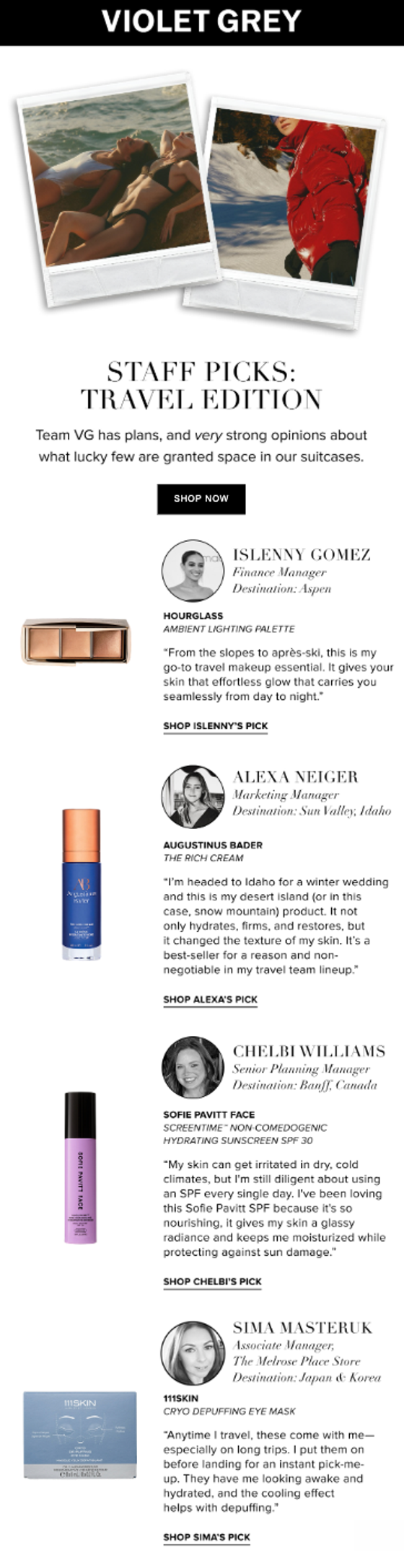
VIOLET GREY’s Staff Picks: Travel Edition email features product recommendations from its team. The selections are supported by personal quotes and travel context, explaining what staff members choose to take with them.
Why it works: The products aren’t simply presented as another collection to shop. The recommendations come with an identifiable source and context for why they’re useful, giving customers more information to evaluate the suggestions.
Product recommendation email tip: Use recommendations from people with relevant experience or expertise. A beauty brand could feature products selected by makeup artists, while a sportswear brand could showcase gear recommended by athletes or coaches.
Brand-led discovery
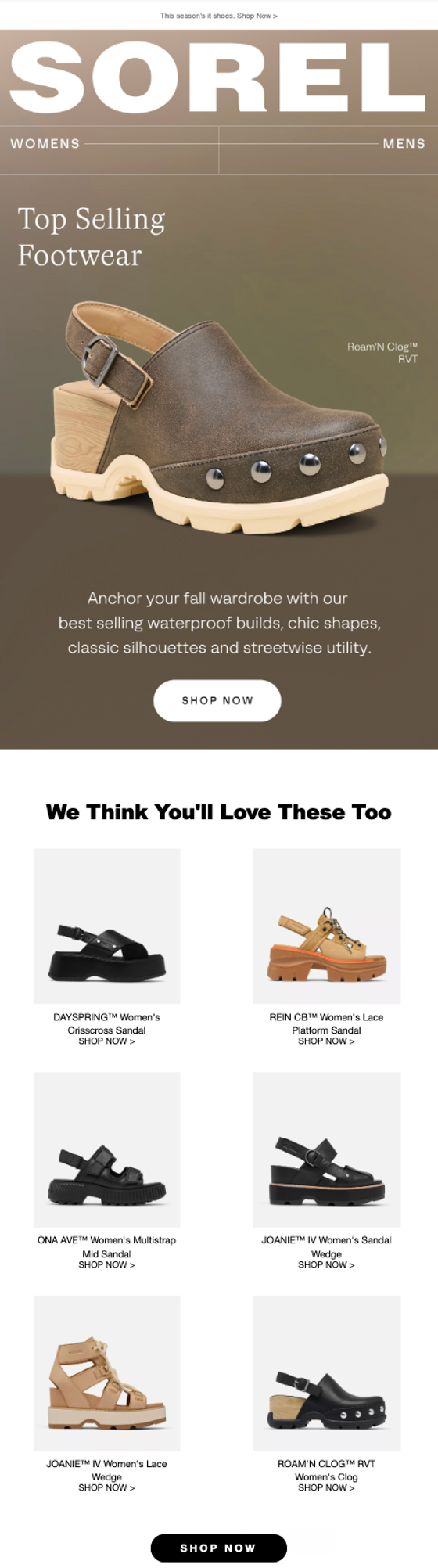
SOREL
use current trends to introduce relevant product options
Marketing angle: Turn trend-driven interest into product discovery.
SOREL’s Now Trending email introduces a selection of footwear styles through lifestyle photography and a shoppable product grid.
Why it works: The campaign gives customers a reason to explore a curated selection rather than browse the entire footwear catalog. Positioning the products around current styles creates a clear theme for the recommendations.
Product recommendation email tip: Use seasonal interests and product trends to build focused recommendation campaigns. For example, a footwear brand could recommend styles for an upcoming season, while a homeware brand might introduce products around emerging decorating preferences.
How to choose the right product recommendation strategy
A useful recommendation starts with understanding why a customer might want the suggested product.
Browsing and purchasing data can help identify products customers have already shown interest in, or complementary items they may need next. Product relationships can help brands recommend matching accessories, complete sets or additional items within a routine.
For customers who are still deciding, quizzes and product comparisons can help narrow down the options. Educational content, expert selections and curated collections can introduce relevant products even when there isn’t a specific purchase to build on.
The goal isn’t to recommend more products for the sake of it. It’s to give customers a relevant reason to consider something they might otherwise have missed.
For the targeting behind these campaigns — which customers should see which products, and when — read how to send product recommendation campaigns and how to cross-sell ecommerce customers. For more creative, see promotional email examples.
Nexie is an AI-native ESP for e-commerce brands. It reads your customer data across engagement, recency, category interest and lifetime value together, surfaces the audiences worth campaigning to, and builds those campaigns for your team to review and approve, inside the guardrails and marketing policies you set. See how it works →