
Not every promotional email needs to be a 20% off sale. If an ecommerce brand wants to increase average order value, a free gift above a certain spending threshold might make more sense. If the goal is to move specific products, a buy-one-get-one offer could work better than discounting the entire store.
The important part is knowing what you want the promotion to achieve and which customers should receive it. Otherwise, you could end up offering discounts to customers who would have purchased at full price anyway.
Here are 9 real promotional email examples from ecommerce brands, each using a different strategy to encourage purchases.
They fall into four approaches. Some give an immediate financial reason to buy, where the structure of the discount shapes what the customer adds to the order. Some push order value up through bundles, minimum spend and complementary gifts. Some make the offer feel earned rather than public, through exclusive access or a personal benefit. Others are built to influence when the purchase happens, either immediately or on a later visit.
Immediate savings
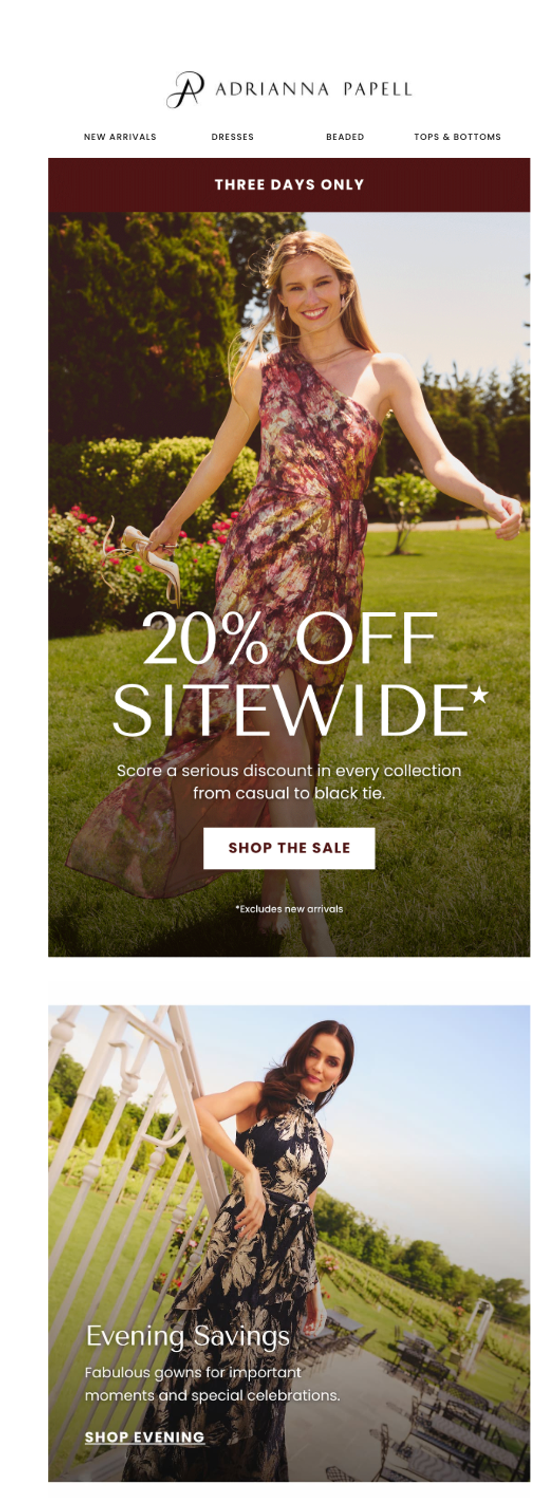
Adrianna Papell
encourage shopping across the store with a sitewide discount
Marketing angle: A straightforward discount across most of the catalog.
Adrianna Papell announces its sale with the subject line “20% Off Sitewide 🤩 (Almost) Everything’s On Sale,” alongside the message “Prices. Just. Dropped.”
Why it works: The offer is easy to understand and gives customers flexibility to shop across different collections. Rather than limiting the promotion to a handful of products, the broad discount creates an opportunity to explore the store and purchase something they’ve been considering.
Promotional email tip: Sitewide discounts make sense when you want to encourage purchases across several product categories. Keep the offer simple and make any exclusions clear.
Immediate savings
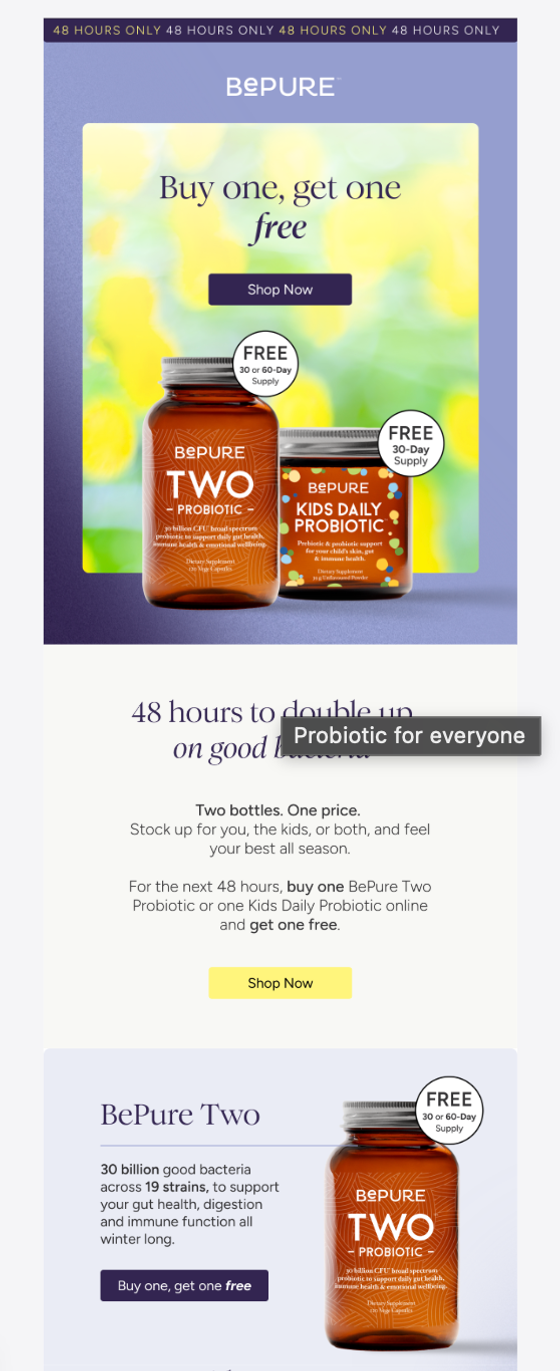
BePure Wellness
encourage customers to stock up with a BOGO offer
Marketing angle: Make purchasing multiple units more attractive.
BePure Wellness runs a 48-hour buy-one-get-one-free promotion for its probiotics, using the message “30 billion good bacteria. Two bottles. One price.”
Why it works: Probiotics are products customers may purchase regularly. Offering a second bottle free encourages customers to stock up on something they’re likely to need again, rather than purchasing just one unit.
Promotional email tip: BOGO campaigns can work particularly well for consumable or frequently repurchased products. Use them when encouraging customers to purchase additional quantities makes sense for both their needs and your margins.
Larger orders
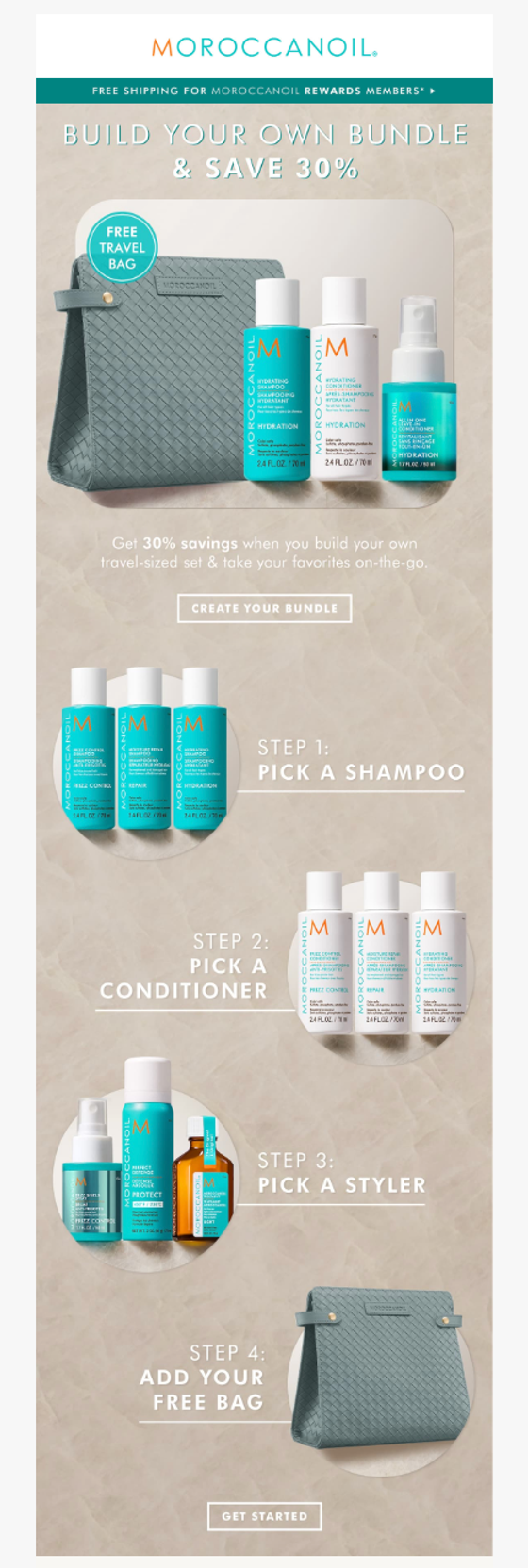
Moroccanoil
let customers build their own discounted bundle
Marketing angle: Encourage customers to combine multiple products in one purchase.
Moroccanoil offers customers 30% off when they build their own bundle. Its subject line is “Mix, match, and save 30%,” encouraging shoppers to choose products that suit their needs.
Why it works: Instead of forcing customers to purchase a predefined bundle, Moroccanoil lets them select the products they want while offering an incentive to buy more than one. The flexibility makes the offer more appealing to customers with different product preferences.
Promotional email tip: Mix-and-match offers can be useful for brands selling complementary products. Let customers build bundles around products they actually want, while using the discount to encourage a larger purchase.
Larger orders
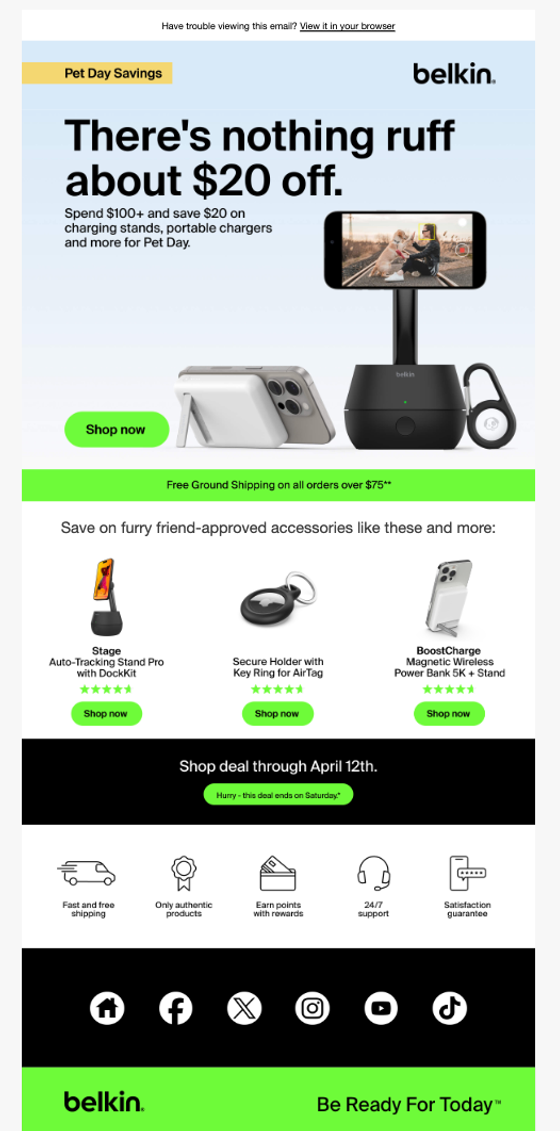
Belkin
use a spending threshold to encourage larger orders
Marketing angle: Encourage customers to spend above their usual order value.
Belkin runs a promotion offering customers $20 off when they spend $100 or more. The offer gives shoppers a specific spending target, encouraging them to explore additional products to qualify for the discount.
Why it works: The spending threshold creates a reason to increase basket size. A customer who was originally planning to buy one product might consider adding a charger, cable or accessory to unlock the savings. The discount makes the additional purchase more attractive.
Promotional email tip: Look at your store’s historical order values to understand how much customers typically spend. You can then test a discount threshold slightly above that amount to encourage larger purchases. Make sure the additional spending justifies the discount, and recommend relevant products that help customers reach the threshold.
Larger orders
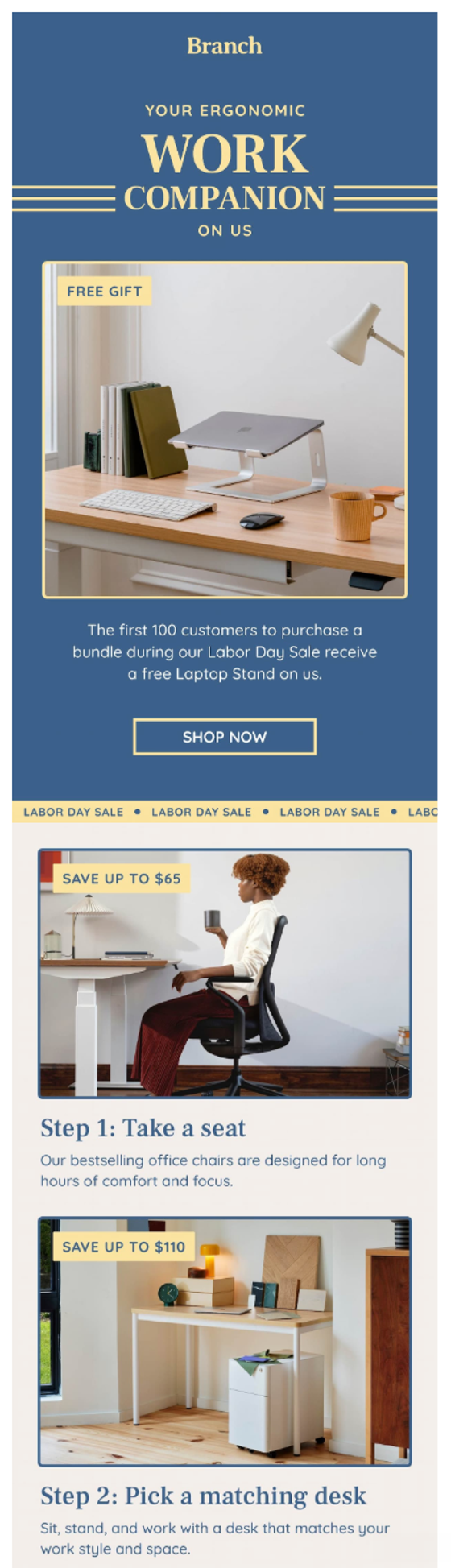
Branch
offer a free gift instead of discounting the main product
Marketing angle: Add value to a purchase through a complimentary product.
Branch offers a free laptop stand to the first 100 customers who purchase an eligible furniture bundle. The promotion leads with the subject line “Your free gift is waiting.”
Why it works: Instead of reducing the price of its furniture, Branch adds an accessory that complements the customer’s purchase. The free gift makes the bundle more attractive, while the limit of 100 qualifying orders provides a genuine reason to act sooner.
Promotional email tip: For higher-value products, consider offering a complementary item instead of a direct discount. A relevant free gift can increase the appeal of a purchase without lowering the advertised price of the main product.
Exclusive offers
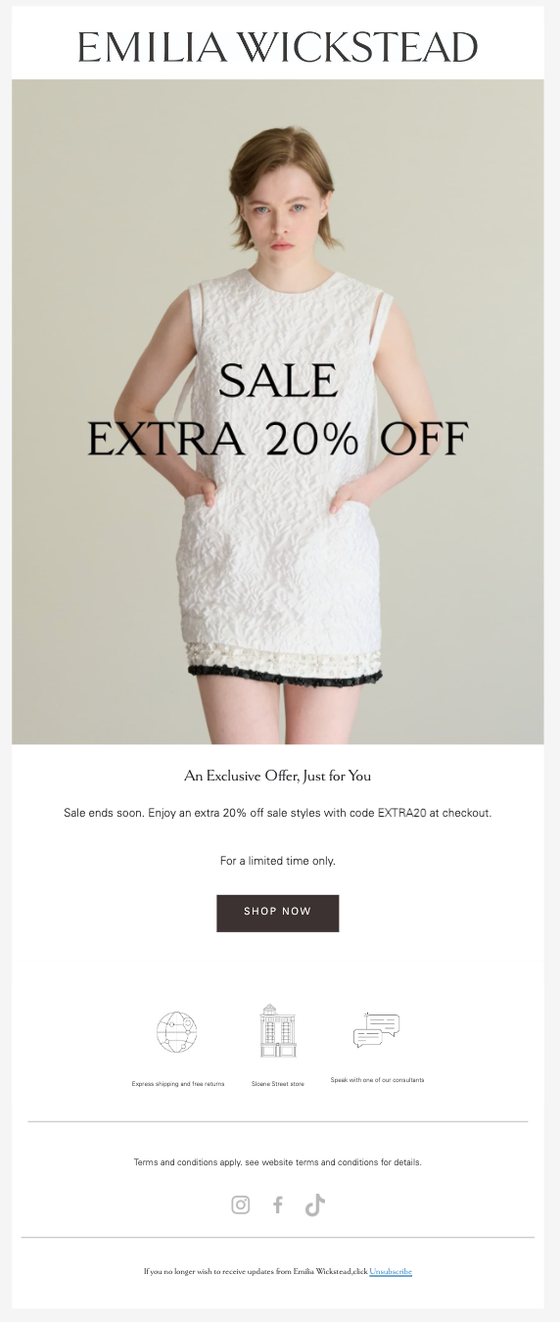
Emilia Wickstead
make a discount feel like an exclusive opportunity
Marketing angle: Reward customers with access to a private promotion.
Emilia Wickstead announces an additional 20% discount with the subject line “Extra 20% Off Sale: Your exclusive access,” positioning the promotion as a special opportunity.
Why it works: Rather than presenting the offer as another general sale announcement, the email frames it around exclusivity. The messaging gives customers a reason to feel that the offer is intended for them, rather than simply being another discount available to everyone.
Promotional email tip: Consider creating exclusive promotions for VIP customers, repeat buyers or highly engaged subscribers. Give those segments a meaningful benefit, such as an additional discount or early access, rather than sending the same offer to your entire audience.
Exclusive offers
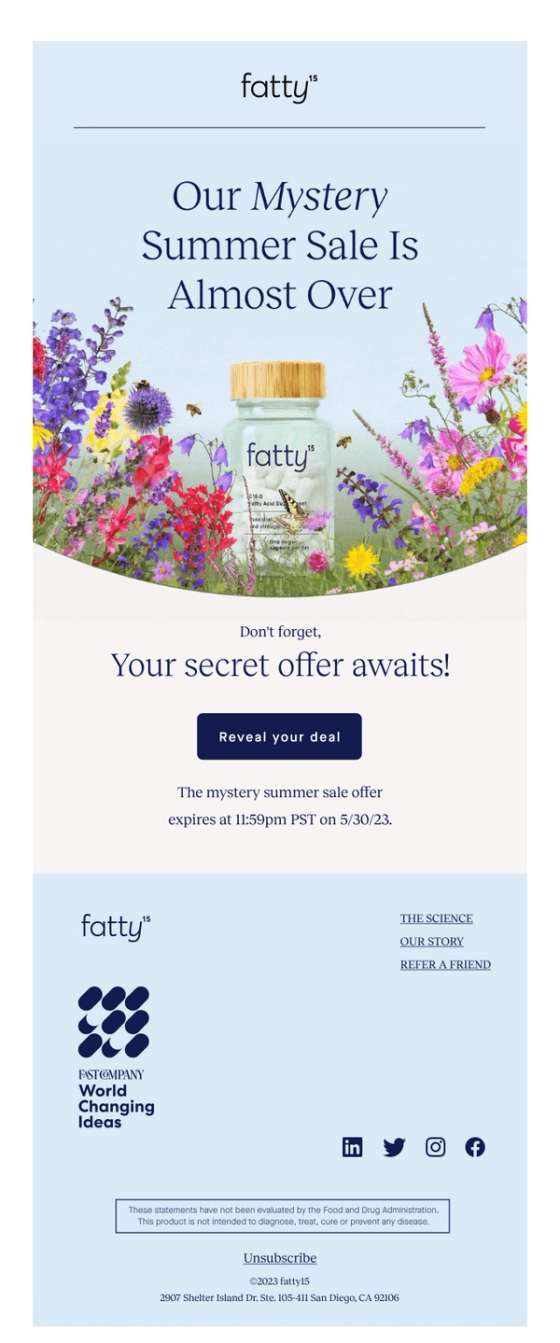
Fatty15
turn a discount into a mystery customers want to reveal
Marketing angle: Use curiosity to encourage customers to explore a promotional offer.
Fatty15 runs a mystery sale with a “Reveal your deal” CTA, inviting customers to discover their offer before the promotion expires.
Why it works: Instead of revealing the discount immediately, the campaign gives customers something to discover. The mystery creates an additional reason to interact with the email, while the expiry gives customers a limited window to claim their offer.
Promotional email tip: Mystery promotions can make familiar discounts more interesting. If you’re using this approach, make sure the revealed offer provides genuine value and the experience doesn’t introduce unnecessary friction.
Purchase timing
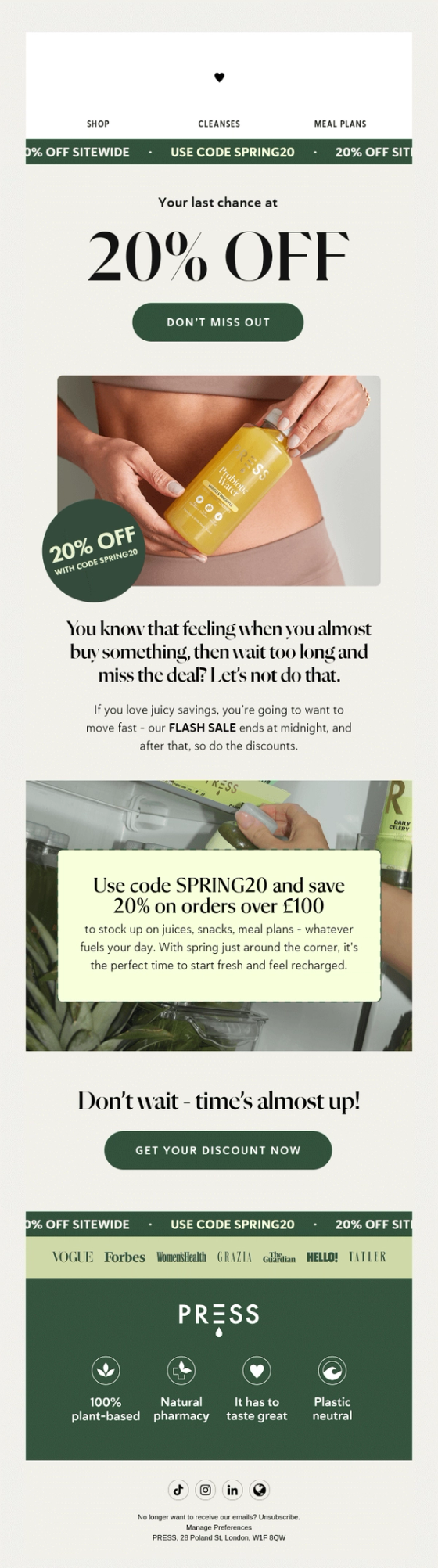
PRESS
create urgency with a flash sale
Marketing angle: Give customers a short, defined window to purchase.
PRESS sends a promotional reminder with the subject line “Our Flash Sale Ends Tonight,” making it clear that the current offer is about to expire.
Why it works: Customers who have been considering a purchase now have a specific deadline. Instead of relying on a vague message about limited-time savings, the email tells them when the opportunity ends.
Promotional email tip: Use flash sales when you have a genuine reason to create a shorter purchasing window. Make the discount and deadline clear, and target reminders toward customers who have shown interest in the promotion.
Purchase timing
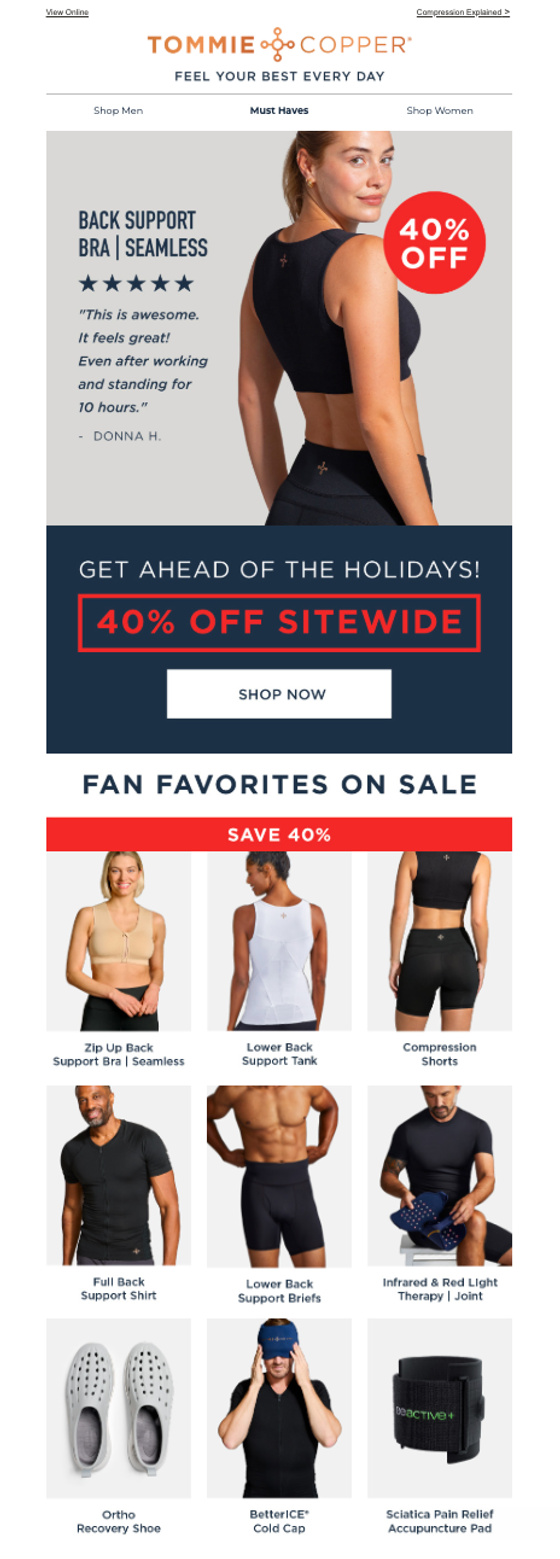
Tommie Copper
use today’s purchase to encourage another one
Marketing angle: Reward the current purchase with a discount on a future order.
Tommie Copper runs a campaign called “Save Now. Earn A Holiday Bonus.” Customers who spend $100 or more can earn $20 in Christmas Cash to use on a future purchase of $100 or more.
Why it works: The offer gives customers a reason to spend now while creating another incentive to return. Instead of ending the relationship with the current transaction, the promotion connects today’s purchase with a possible second order.
Promotional email tip: Consider future-purchase credits when repeat purchases are a priority. Use historical customer purchase patterns to decide which customers might find the incentive relevant, and set redemption terms that make the reward worthwhile without unnecessarily reducing margins.
Choosing the right promotional strategy for your ecommerce brand
The best promotional strategy depends on what you’re trying to accomplish.
A sitewide discount can encourage purchases across your catalog, while BOGO and bundle offers encourage customers to buy more products. Minimum-spend discounts can increase basket size, and free gifts can add value without reducing the main product’s price.
Exclusive offers and mystery promotions create different reasons to engage. Flash sales encourage customers to act within a specific window, while future-purchase credits give them a reason to return.
Start by understanding how your customers already shop, what they purchase and how much they typically spend. That information can help you choose an offer that encourages the purchasing behavior you’re trying to influence, rather than sending another generic discount campaign.
For the thinking behind which offer to reach for — and when no incentive is the right answer — read how to create better ecommerce offers and promotions and how to optimize discounts. For more creative, see Black Friday email design ideas.
Nexie is an AI-native ESP for e-commerce brands. It reads your customer data across engagement, recency, category interest and lifetime value together, surfaces the audiences worth campaigning to, and builds those campaigns for your team to review and approve, inside the guardrails and marketing policies you set. See how it works →